
Famco Chimney Sweep in Pembroke Pines: A Homeowner’s Guide
If you searched “Famco chimney sweep,” you’re probably looking at a cap or vent cover on your roof with FAMCO stamped on it and wondering who installed it and who keeps it working. Here’s the short version: FAMCO is a manufacturer of chimney and ventilation products, not a service company. The cap on your flue is a piece of hardware, and it still needs a real chimney professional to inspect, service, and replace it when the Florida sun and weather get to it. If you’d rather not climb up there to sort it out yourself, call (855) 701-1714 and we’ll take a look.
What Does FAMCO Actually Make?
FAMCO is a manufacturer, not a chimney sweep. The company builds ventilation and chimney products: caps, exterior louvers, dryer vents, and damper covers. That distinction matters because a lot of Pembroke Pines homeowners find a FAMCO nameplate on their roofline and assume it points them to a service provider. It points to a factory.
What that means in practice is that the FAMCO component on your chimney was installed by a contractor, a builder, or a previous homeowner at some point in the home’s life. The part is doing a real job up there, and it’s doing it in Florida conditions that punish metal and screen mesh. When it fails, the fix isn’t to call FAMCO. It’s to have a specialist inspect the whole chimney system, confirm the cap is the actual problem (sometimes it isn’t), and source the correct replacement.
Here’s what FAMCO products typically appear as on a Pembroke Pines roof:
- Chimney caps – the lid and spark screen assembly over the flue opening
- Exterior louvers – vented covers used on chase-style and prefab chimney terminations
- Dryer vents – exterior vent hoods and covers (note: these are a separate system from your chimney and get serviced separately)
- Damper covers – top-sealing hardware that keeps rain and animals out when the fireplace isn’t in use
If you’re not sure what you’re looking at from the ground, that’s normal. A proper inspection tells you exactly what’s up there, what condition it’s in, and whether it needs to be replaced this year or can wait.
How to Tell a FAMCO Cap From a Generic One
Walk outside and look up at your chimney from the yard (not the roof). A FAMCO cap usually carries a stamped or embossed nameplate on the lid or the frame. Generic caps from the hardware store often have no marking at all, or a sticker that peeled off years ago.
Once you’ve found the nameplate, the things that actually matter for replacement are:
- Flue opening dimensions – the inside measurement of the clay tile or metal flue, not the outside of the crown
- Cap footprint and mounting style – whether it’s a slip-in, a bolt-on, or a full crown-mount design
- Material – stainless steel, galvanized, aluminum, or copper
- Screen mesh size – the spark arrestor mesh, which matters for keeping out animals and embers
This is where people get into trouble. They measure the old cap’s outside dimensions, order a replacement online, and it doesn’t fit because the mounting collar was the part that had to match. In Pembroke Pines, our prefab and masonry chimneys come in several common sizes, and the brand alone doesn’t tell you the size. You measure the flue, not the cap.
A specialist will size the replacement from the existing installation, confirm the flue isn’t damaged before covering it back up, and choose hardware from a professional line. We work with FAMCO, Gelco, and Copperfield for caps and damper solutions specifically because those are the components masons and chimney contractors specify on real jobs.
How FAMCO Caps Fail in Pembroke Pines Weather
South Florida is hard on exterior metal. The two biggest things we see on rooftop chimney hardware here are UV degradation and screen clogging, and both show up on FAMCO and generic caps alike.
UV degradation eats coatings. Paint chalks, powder coat fades and lifts, and once the coating is compromised the metal underneath starts to go. Aluminum caps are especially prone to this, and once the finish is gone, the thin wall of an aluminum cap corrodes much faster than a stainless one.
Screen clogging happens from palm fronds, seed pods, and general debris. When the spark screen packs up, the flue can’t draft properly. You’ll notice it as smoke rolling back into the room, a fireplace that’s harder to light, or a wood-burning insert that just won’t draw. That’s a symptom of a blocked termination, not necessarily a chimney problem inside the house.
Loose fasteners and bent frames show up after heavy weather. A cap that’s rattling or shifted isn’t sealing, and an unsealed cap means water is getting into the flue. That’s the one that turns a small hardware issue into a chimney repair.
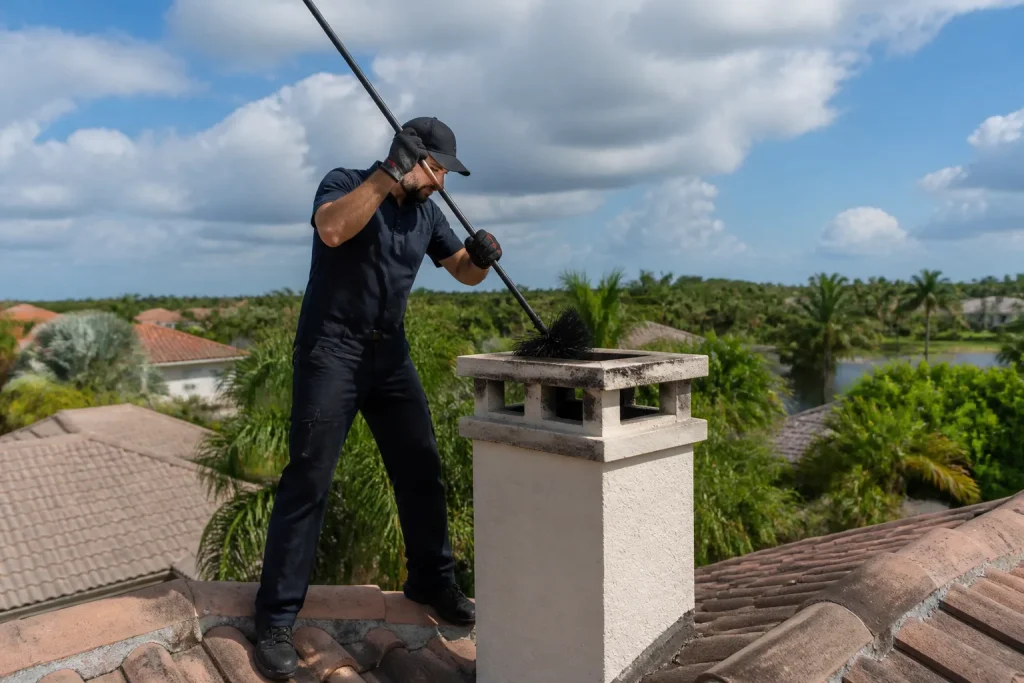
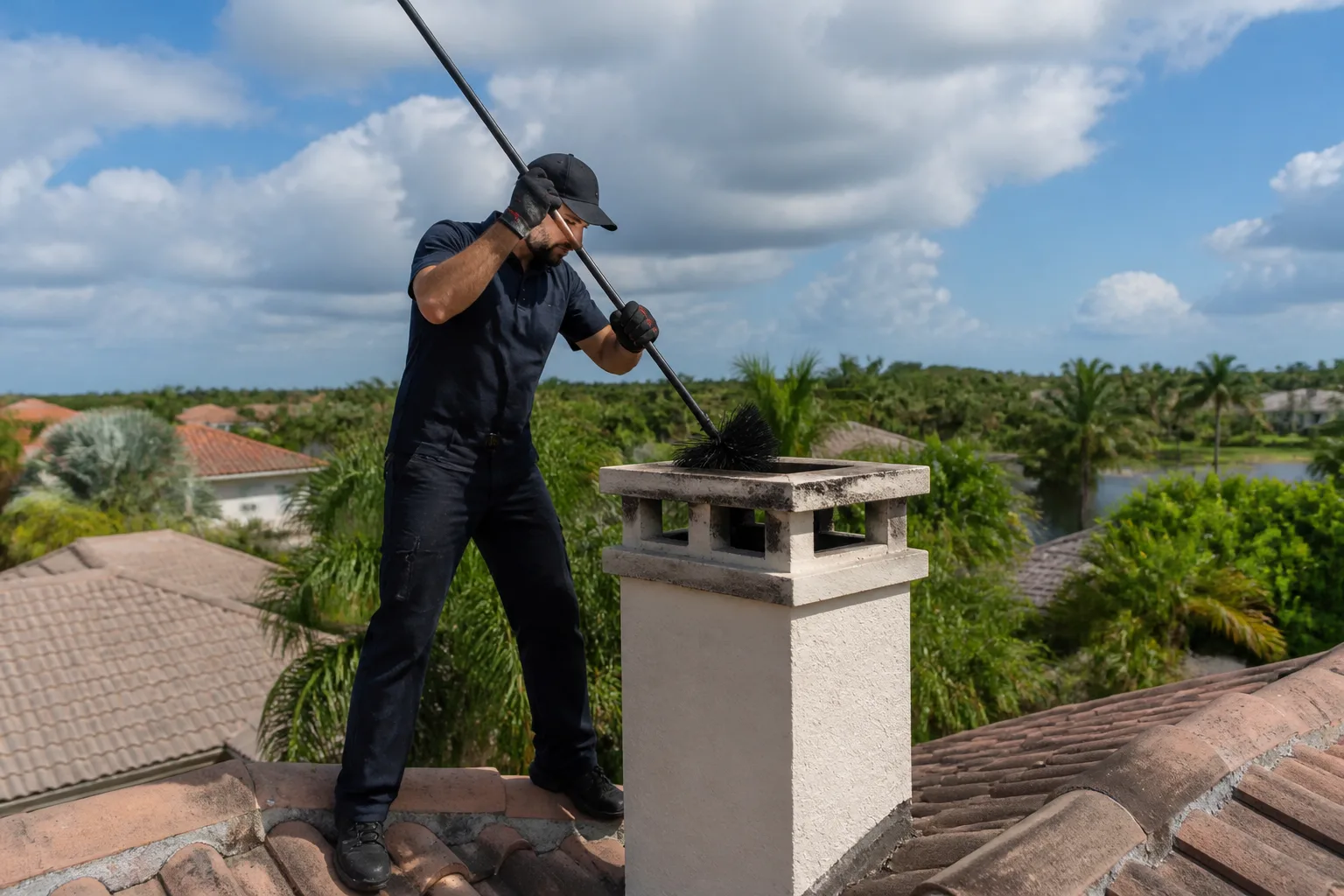
None of this is a reason to panic. It is a reason to have the cap looked at as part of your routine chimney sweep, because the sweep and the cap inspection happen at the same time, from the same visit.
What a Chimney Specialist Does That a Handyman Won’t
A handyman can swap a cap. What a chimney specialist does is check whether the cap was the only problem.
During a service call that involves FAMCO or any other rooftop component, we inspect first and recommend second. That means:
- Checking the flue for cracks, gaps, or a failed liner before anything covers it back up
- Looking at the crown and the mortar at the top of the chimney, not just the cap
- Confirming the damper and smoke chamber aren’t restricting draft in a way a new cap won’t fix
- Photographing what’s up there so you can see the actual condition
The reason this matters is that “my fireplace smokes” gets blamed on the cap constantly, and sometimes the cap isn’t the issue. A damaged flue liner, a partially collapsed crown, or a blocked smoke shelf can all cause the same symptom. Replacing a cap that was fine while the real problem keeps running is a waste of your money and, in the case of a damaged liner, a safety issue.
We hold to the Monarch standard on this: proper diagnosis before any work, documented with an inspection. The cap is one component in a system, and we treat it that way.
When to Call a Pro
Replacing a cap is technically a homeowner job if you’re comfortable on a roof and you’ve measured correctly. Here’s when you shouldn’t do it yourself:
- Your fireplace or insert is smoking into the room
- You smell a strong creosote or burning odor when the fireplace isn’t in use
- You can see water staining on the ceiling or the firebox
- The cap looks collapsed, missing, or has lost its screen
- You’ve never had the chimney inspected and don’t know its condition
Roof work is the obvious physical risk, so we’d say leave the climbing to a trained technician. But the bigger reason is diagnostic. A cap swap that doesn’t include a look at the flue is a guess. If you’re in Pembroke Pines and want a straight answer, we offer free estimates, and a chimney repair recommendation only comes after the inspection.
How to Get the Right FAMCO Replacement Part
Ordering the right replacement starts with the existing installation, not with a product listing. The steps that actually work:
- Identify whether your cap is a standard single-flue slip-in, a multi-flue crown mount, or a full custom-fabricated style
- Measure the inside dimensions of the flue opening (the tile or metal, not the cap frame)
- Note the material of the existing cap and whether the finish is failing
- Match the mounting method: slip-in collars, bolt-on brackets, and crown-mount frames aren’t interchangeable
- Confirm the screen mesh is correct for what you’re burning (wood appliances need spark screening)
If you’re sourcing from FAMCO directly, the model number on the old cap is your best starting point. If the nameplate is gone or unreadable, sizing has to come from the flue dimensions. Ordering a “FAMCO chimney cap” without that information is how people end up returning two caps and giving up.
In our experience, the honest answer is that most homeowners can’t reliably measure their own flue from the ground, and this is one of the few times we’d say the measurement is worth paying a professional to take. If you’re working with a Monarch Chimney Sweep inspection, that measurement comes standard.
Does Your FAMCO Cap Need Replacement or Just Cleaning?
Cleaning is the answer more often than replacement. A clogged screen and a cap that’s structurally sound just needs to come off, get cleared, and go back on. If the metal is sound and the mounting is intact, there’s nothing to buy.
Replacement makes sense when the frame is bent, the coating is gone and the metal is pitting, the screen is torn, or the cap no longer seals against the flue. On Pembroke Pines roofs where the cap has been up for a long time and the finish has failed, replacement is usually the right call, and a stainless cap will outlast an aluminum one in this climate.
Where homeowners get talked into unnecessary work is when someone up on the roof decides the cap needs replacing without checking the flue underneath. We don’t do that. Nothing gets recommended unless the inspection supports it, and you see the photos before you decide. Sometimes the answer is “clean it and check back next year,” and we say so.
The Bottom Line
FAMCO makes chimney and ventilation components, not chimney service calls. The FAMCO cap or vent on your Pembroke Pines home is doing a real job, and its condition matters to your fireplace’s draft and to keeping water out of the flue. Size any replacement from the flue, not the old cap. Have the whole system inspected when you service the cap, because a bad cap and a bad liner can look like the same problem from inside the house.
If you want the cap and the chimney checked properly in one visit, we can help. Our technicians have up to 8 years of experience, we use professional-grade materials from brands like FAMCO, Gelco, and Copperfield, and every job starts with an inspection. If you’re in Pembroke Pines and need chimney help, Monarch Chimney Sweep offers free estimates. Call (855) 701-1714. We answer 24/7. Fast dispatch from 7am to 7pm, Sunday through Friday.
If you’d rather start with the broader picture for your area, our Pembroke Pines page covers what we do here.
Frequently Asked Questions
No. FAMCO is a manufacturer of chimney and ventilation products such as caps, exterior louvers, dryer vents, and damper covers. It doesn’t perform chimney service. If there’s a FAMCO component on your roof, a chimney professional handles the inspection and replacement. Call (855) 701-1714 for a free estimate.
Measure the inside dimensions of the flue opening, not the outside of the existing cap, and note the mounting style (slip-in, bolt-on, or crown mount). The model number on the old cap is the fastest path if it’s still readable. When in doubt, have a specialist measure it during an inspection. Call (855) 701-1714 to book one.
The most common cause is a blocked spark screen or cap termination, followed by a damaged flue liner or an obstructed smoke chamber. A clogged FAMCO or generic cap stops the flue from drafting properly, which pushes smoke indoors instead of up and out. The only way to know which it is, is an inspection. Call (855) 701-1714 for a free estimate.
You can, if you’re comfortable on the roof and you’ve measured the flue correctly. If the fireplace is smoking, if you can’t confirm the flue condition underneath, or if you’ve never had the chimney inspected, a trained technician should handle it. Roof work is a real fall risk, and a cap swap without an inspection skips the diagnosis that matters. Call (855) 701-1714 and we’ll take a look.
Written by the team at Monarch Chimney Sweep.
Need Chimney Cleaning Help?
Call Monarch Chimney Sweep - licensed & insured, here with fast help in Pembroke Pines.
(855) 701-1714